
Ozark City Directory Collections and Gaps
Christian County Library is the practical first stop for an Ozark city directory search. Its local-history resources connect readers with archived newspapers, court and census material, local books, microfilm, obituaries, school rolls, cemetery material, maps, and genealogy databases. The Anderson History Room at the Ozark Community Branch is the place to ask whether a particular directory, telephone book, or address directory is available. The library does not publish a verified Ozark run, publisher, reverse-directory run, or shelf call number online. That missing detail matters, so request the catalog record or inspect the volume before recording a year as local coverage.
| Collection | Years | Where Held | Access |
|---|---|---|---|
| Anderson History Room local-history material | Exact directory years not published | Christian County Library, Ozark Community Branch | Ask staff; local books, microfilm, newspapers, and court or census material may be viewed on screen or printed |
| Local directory and telephone volumes | Not verified | Library and Library of Congress catalog inquiry | Confirm publisher, year, reverse section, and call number before use |
| Library of Congress directory collection context | Roughly 1861 to 1960 nationally | Library of Congress guide | Free guide to expected directory fields; not proof of an Ozark volume |
| Library of Congress reverse telephone-directory context | Roughly 1930 to 2005 nationally | Library of Congress guide | Free method reference; local Ozark coverage remains unverified |
| Ozark Sanborn map items | 1900, 1906, 1914, and 1930 | Library of Congress | Free digitized map items; they show places, not occupants |
Christian County records supply a parallel historical shelf when the directory lead needs proof. The Missouri State Archives guide lists direct and inverted deed indexes from November 1865 through 1994, deed books beginning in 1861 to 1870, and several probate series. Those dates belong to courthouse records, not to an Ozark directory. Keeping the two kinds of coverage separate prevents a solid deed date from becoming an unsupported directory claim.
Ozark Library Sources for Directories
The Christian County Library local-history collection gives an Ozark researcher more than one kind of name evidence. Its links include the Christian County Headliner, obituary lists, census material, school class rolls, cemetery sources, Ozark histories, Missouri Digital Heritage, Sanborn resources, and subscription databases. A directory hit is stronger when its spelling, household notation, and street number agree with one or more of those local sources. The library also identifies on-screen or printed access to local books, archived newspapers, court and census documents, and microfilm.
A view from the library's local-history collection shows the kind of research gateway available for Ozark directory work.
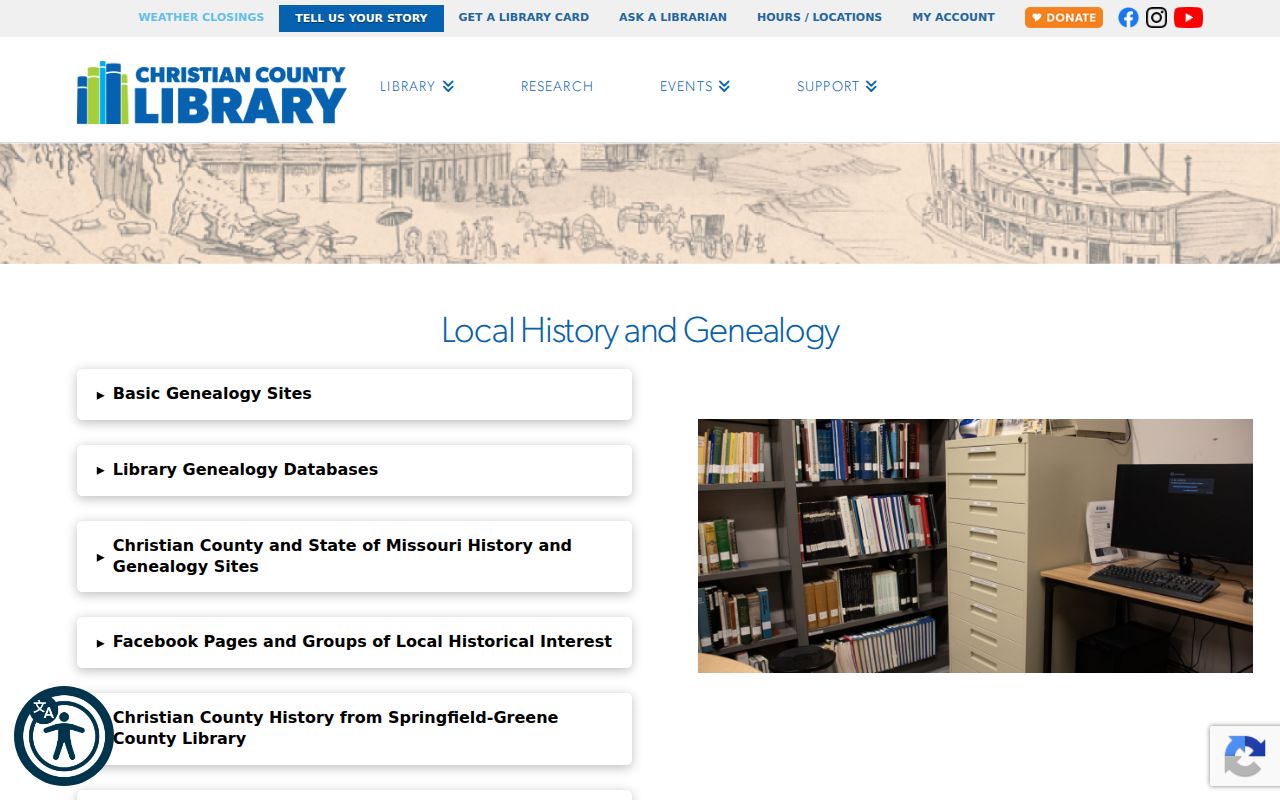
The library route is useful even when the needed volume is not on a public web list, because staff and local-format material can confirm what actually exists.
For a family that appears under Ozark, a rural route, or a nearby community, preserve initials, suffixes, a spouse notation, and the printed occupation text. Christian County sources can connect Ozark families to Nixa, Sparta, Highlandville, Springfield, and rural parts of the county. The place label in a volume may be a mailing description rather than the modern city boundary. A match should therefore rest on several details, not just a familiar surname.
Reading Ozark City Directory Entries
No local Ozark entry image was verified in the research, so the field order and abbreviations of an Ozark city directory must be checked in the volume itself. The Library of Congress guide does document the field classes normally worth capturing: surname and given name, spouse or household notation, street address, business address, occupation or business description, employer text when printed, widow or household-status notation, civic references, and telephone information in telephone books. Copy the key page that explains abbreviations before interpreting a mark beside a name.
The Library of Congress directory reference illustrates the field types a reader should look for in an Ozark volume.
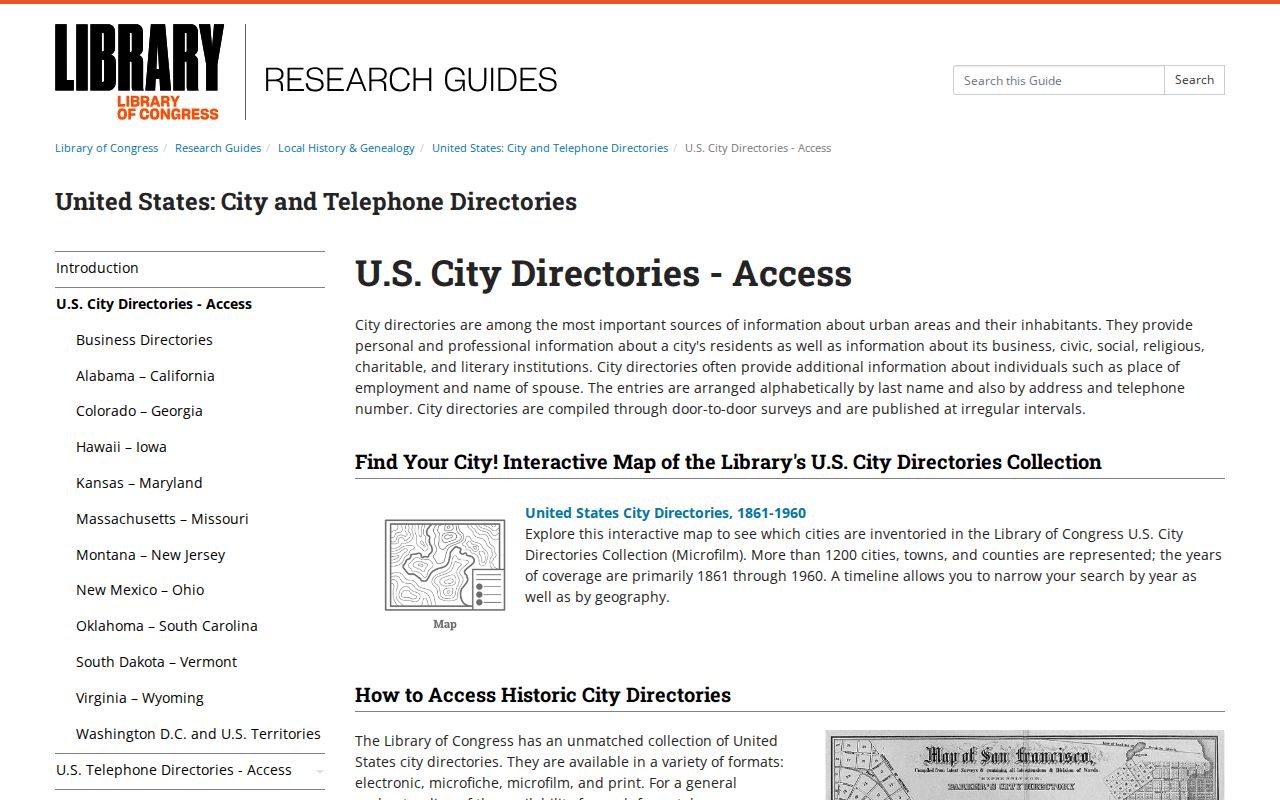
Use the guide as an inventory, then let the title page and abbreviation key in the local volume control the interpretation.
| Name | Surname and given name, including initials, suffixes, or alternate spellings |
|---|---|
| Household detail | Spouse, widow, or other household notation when the volume prints it |
| Address | Street address and, where present, a separate business address |
| Work text | Occupation, business description, or employer text only when printed |
| Directory clues | Civic reference, telephone information, or a status abbreviation, depending on the volume |
- Criss-cross directory
- An address-order section that can run by street and house number to identify the listing associated with that address.
- Householder index
- An index or list organized around the named household entry, if the particular volume includes one.
- Abbreviation key
- The explanatory page in a volume. Read it first because local shorthand and field order were not verified for Ozark.
Ozark Reverse Directories by Address
Reverse and criss-cross volumes reverse the usual path. Instead of beginning with a surname, they group listings by street and number. That makes them useful when an old photo, deed, newspaper item, or family note supplies an address but no full name. The Library of Congress describes this method, but no verified local Ozark reverse run or year has been located. Ask the Anderson History Room or Library of Congress catalog staff for the title, year, and geographic coverage before treating an address listing as local evidence.
Address order is not the same as a deed chain. A directory entry may show a listed person at a point in time, while a deed records a conveyance and legal parcel description. When the question is who owned a place through time, use the Ozark previous residents search for the backward parcel workflow instead of treating a directory listing as ownership proof.
Note: A street number may not match the wording in an older instrument, so retain cross streets, subdivision clues, and the printed directory year.
Ozark Directory Maps and Addresses
Ozark Sanborn items from 1900, 1906, 1914, and 1930 provide a useful address-continuity check. The 1906 Library of Congress item is one dated entry point. The sheets can show street names, building footprints, construction material or use, lot relationships, and whether a structure stood before a later permit. They do not identify occupants. Compare the directory's printed address with the sheet, an old lot or subdivision description, and the present parcel record before deciding that two similar addresses refer to the same place.
The Christian County Historical Society offers another local-history setting for Ozark directory research.
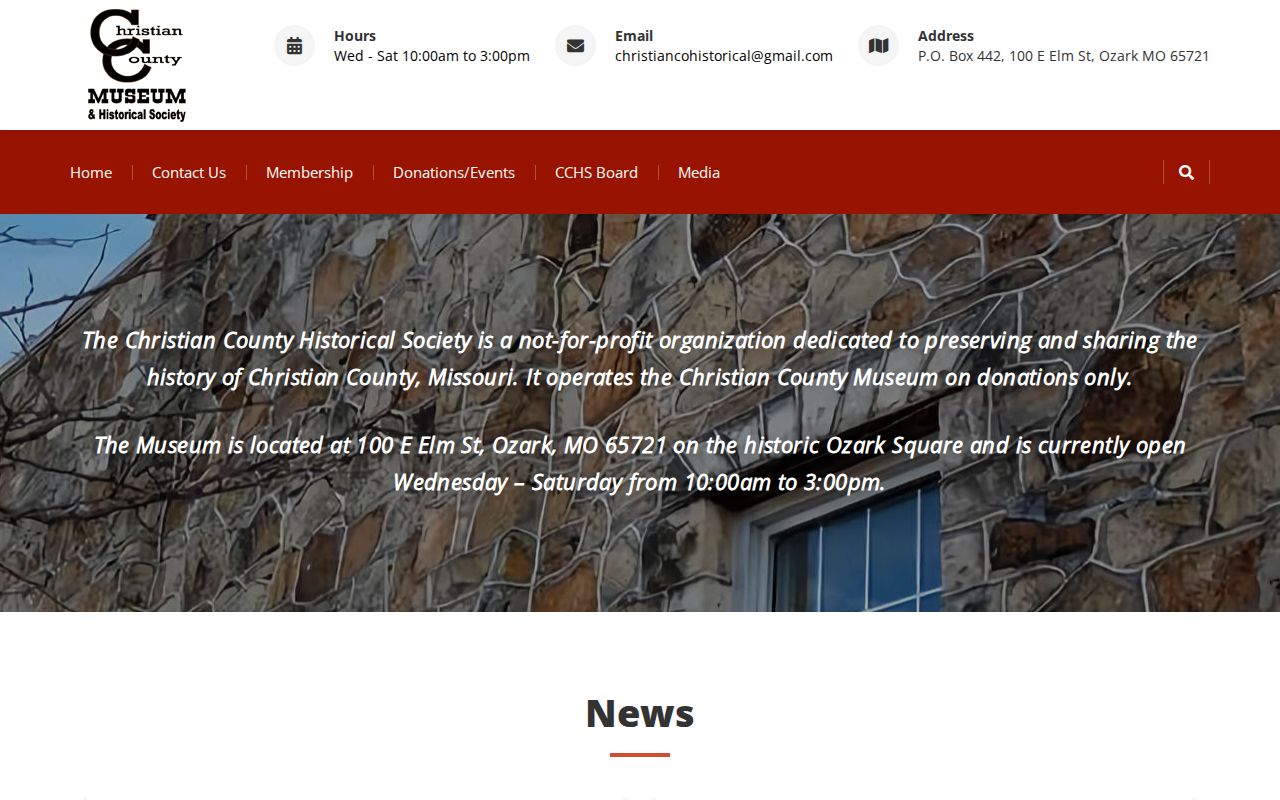
Historical Society material can add community context, while the Library of Congress map items supply the dated physical evidence.
The 1912 county atlas listed by the State Archives, the ward map, and original lot or subdivision fields can also bridge a changed street description. No official source located a dated citywide Ozark renumbering project. Treat a suspected number change as a question to test through those records, not as a fact to repeat.
Trace Ozark City Directory Households
A household trail is strongest when every step records what the source actually says. Start with the earliest known printed name or address, including punctuation, initials, suffixes, and any spouse or status notation. Then compare later entries one year at a time. A changed address can suggest a move, but it can also reflect a changed street description, a business address, or a different person with the same name. Census schedules, property records, and obituary or probate material provide the separate checks that a directory cannot supply alone.
- Find the first confirmed name or address in a local volume, and copy the title page, year, page, and abbreviation key.
- Follow the spelling through later available volumes, noting each printed street, spouse notation, and occupation text.
- Check the same address in a verified reverse or criss-cross section, if the volume has one.
- Pair the directory date with the nearest released federal census to compare the dated household snapshot.
- Test property continuity through the deed or assessor record, then use maps, obituaries, probate, or cemetery material to close the trail.
Federal census releases follow the 72-year rule, and the 1950 census is the latest public release identified in the research. It supplies a time-specific household record, not a present-day result. A person who disappears from a directory may have moved, died, changed the spelling or initials used in print, or simply been omitted. The next source should be chosen to test that possibility.
Ozark Directory Obituaries and Probate
Christian County Library links obituaries A to Z, cemetery material, funeral-home obituary pages, and the Christian County Headliner alongside its other local-history sources. These can add relatives, service dates, cemetery clues, and a former address. They are historical leads rather than certified proof. When a relationship or estate question needs confirmation, Christian County probate and Recorder material offer a more formal next step.
The State Archives guide lists Christian County probate inventories from 1865 to 1913, letters from 1866 to 1904, settlements from 1866 to 1899, and wills from 1864 to 1925. Those runs are fragmented record groups, not a complete list of every Ozark family. Start with the library for a name clue, then check the custodian or archive for the record that supports it. This sequence respects the difference between a memorial notice and an official filing.
Ozark Directory Preservation Work
The Anderson History Room has a current preservation story behind the shelves. A November 26, 2025 library notice reported that fragile out-of-print books and early local records were being rebound rather than discarded. The first batch cost about $750. That work matters because a brittle local source may survive only through careful handling, a replacement copy, or staff-assisted access.
The Christian County Library bicentennial materials provide additional local context for Ozark historical research.
Preservation work supports future access, but it does not establish an unlisted directory year or publisher. Confirm each volume directly.
Ozark Directory Research Limits
Several details remain intentionally open: the first and last printed Ozark directory years, publishers, local telephone-book years, reverse-directory volumes, and shelf call numbers. The iCounty Recorder portal also does not publish its online index cutoff. A modern online search therefore cannot stand in for a complete historical sweep. For older deeds, probate, court, tax, and directory work, the practical access chain may include the Recorder counter, State Archives, Circuit Clerk, library microfilm, or a Missouri Sunshine Law request.
The Christian County Historical Society lists its current location as 100 E. Elm Street on the historic square, while an older State Archives repository directory gives a different location and phone number. Use the current society page and verify a visit before relying on the older listing. The same care applies to city directory research: cite the volume in hand, describe its limitations, and leave an unverified Ozark run unverified.
Note: A directory, map, obituary, or deed can support a historical connection, but each source answers a different question about a person or place.